Kitchen doors make a strong first impression, but choosing between handleless and Shaker styles is also a practical decision. How do the doors open? Which surfaces will need cleaning? How will the cabinets sit beside appliances and worktops?
Both styles can work in a small kitchen or a large open-plan room. The useful comparison is not simply “modern versus traditional”, but how each approach fits the room and the people using it.
What is different about the doors?
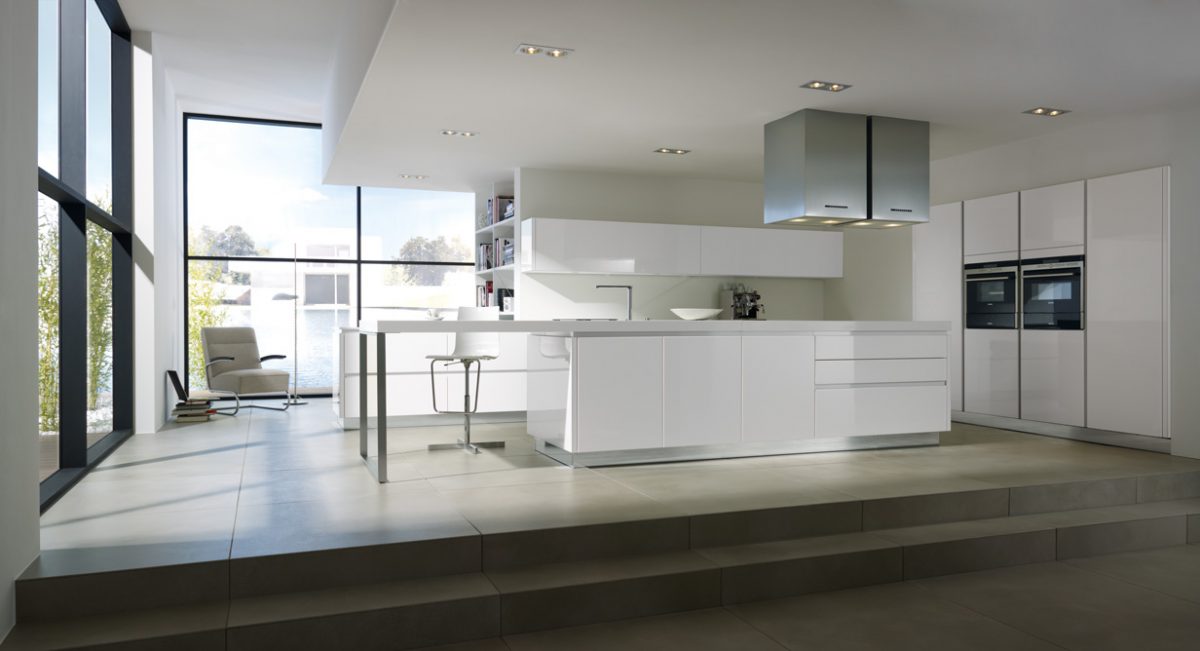
A handleless kitchen keeps the front of the cabinetry free from projecting handles. Opening methods vary: some designs use a recessed grip, others an edge profile or a push-to-open mechanism. Check the actual mechanism rather than assuming all handleless furniture works the same way.
Shaker doors have a framed appearance, with a central panel surrounded by rails and stiles. Handles or knobs become part of the design. Their shape, finish and position can make the same door feel more traditional or more contemporary.
Try the opening method before choosing
Open a wide drawer, a tall cupboard and an integrated appliance door. Consider whether the grip is comfortable and whether it is easy to use with wet hands. A sample door shows the finish, but it does not demonstrate how a loaded drawer or fitted appliance will feel.
If different opening mechanisms are used around the room, check that they feel consistent and that neighbouring doors can open without obstructing one another.
Consider cleaning as well as colour
Flat fronts have fewer decorative recesses to wipe, although recessed grips still need attention. Framed doors have corners and edges where dust can settle. Fingerprints and marks depend on the particular material, colour, sheen and lighting—not just the door style.
Look at samples in daylight and under the lighting planned for the kitchen. Follow the finish supplier’s cleaning instructions rather than treating every painted, laminated or gloss surface alike.
Door style and bespoke construction are separate choices
“Bespoke” describes how furniture is specified and made; it is not a particular door pattern. Made-to-measure furniture can have plain contemporary fronts or framed traditional doors. Similarly, a Shaker appearance does not, by itself, tell you how much a cabinet can be customised.
Where a room has an awkward alcove or an uneven run of walls, ask how cabinet sizes, fillers and internal storage will be handled. These details can matter more to the finished layout than the door style alone.
A short decision checklist
- Try the opening method on drawers, cupboards and appliances.
- Compare samples in the room’s lighting.
- Check which surfaces and grip channels need cleaning.
- Consider how handles, worktops and appliances look together.
- Ask what can be customised, rather than relying on a style label.
For visual examples, explore the modern kitchen gallery and the bespoke kitchen gallery.
Prepared with AI assistance for the Kitchen Design Journal. This is general planning guidance, not an installation specification.